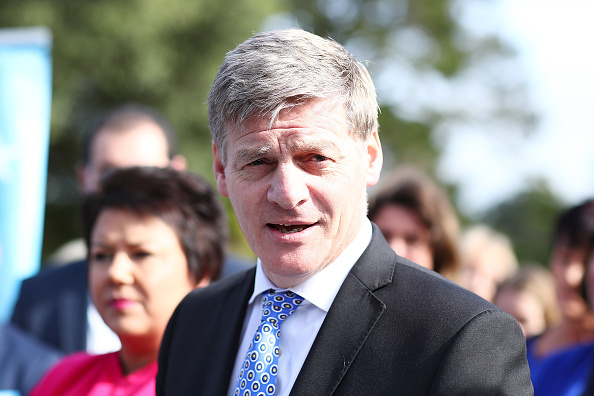
While there be a lot of talk from political parties about a capital gains tax (CGT) next year in the run up to the General Election, English says he thinks it is nearly irrelevant.
During a New Zealand Initiative webinar about Kainga Ora, English says a CTG would be a complexity that doesn’t collect much revenue.
He says every finance minister who looks at it seems to come up with the same answer as the former Labour Government finance minister Michael Cullen told him at the time: “You will go through it and then the IRD will tell you that it is actually not worth it.”
When English was in charge of the country’s finances he says there was no cabinet constituency for a CGT.
He says there is little point in a CGT or any tax targeted at property as house price growth has slowed from the increases of the early 1990s until the Covid peak in 2021 and are unlikely to rise that rapidly again.
“Now investors are going to have to be much smarter at picking value – the right location, the right quality of housing, the right part of the market.”
In a recent rental search, English came across a property owner who couldn’t sell his house. He was quite specific about the market – the first home buyer market is busy, it is turning over, prices are flat, sales are happening and it is similar at the top end because of cashed up buyers who aren’t going into retirement villages, but the mid-market of $1-1.5 million nothing is happening.
“He was scratching his head and saying okay, so what's actually going to happen with this? Is it automatically going to go up in value? To which I said, well, I don't think so, you might have to rent your property out and that's one reason rents are going down in some of our urban areas now.”
English says a CGT should not be an issue, but it will be and there will be a lot more heard about it or a wealth tax over the next 12 months.
Out of control
He was taking part in the webinar to discuss the NZ Initiative’s report, Owning less to achieve more: Refocusing Kainga Ora, which says the state-owned housing provider should sell more homes to community providers and free up undeveloped land for the private sector as it had over-extended itself trying to own, develop and manage social housing.
“It was doing its last owner’s – the Labour Government – bidding when it ran up debt, built more houses and got out of control.”
The report argues the Government does not need to own or manage 77,000 housing units, given its poor track record in this area, especially when state assistance can be provided without extensive ownership.
The report lists several reasons why government ownership can be problematic and has been wasteful.
On indicative calculations, Kainga Ora’s cost structure appears to be approaching twice that of a private landlord benchmark.
Nor has it been good at managing rent arrears or dealing with troublesome tenants who are a threat to their neighbours and government property.
English says functionally, regardless of who the owner is, Kainga Ora is the largest and worst land banker in the country.
“If you want to build a new supermarket in any urban area in New Zealand, there is one owner who's got enough land for you to do it, and that's Kainga Ora. It is the largest controller of underutilised land by a long shot. “There is nobody near it”.
He says the Government’s recent ”radical” zoning changes work for the economy and the Government’s books. “If the changes could be combined with freeing up the latent value in all the under-used and the land banked in every single urban community, you've got a mix for quite a significant positive impact on the economy and more importantly on households ability to service their housing costs.”


 Search