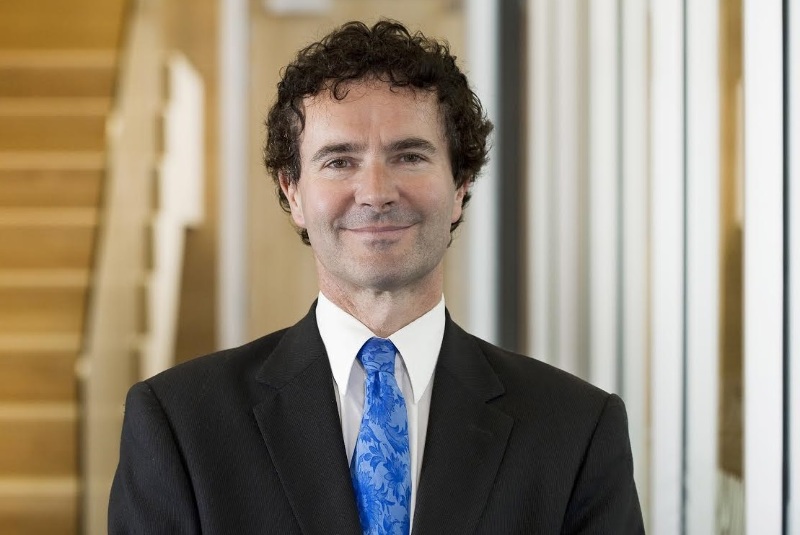
Independent economist Tony Alexander says it is important if interest rates rise to a level borrowers do not expect.
Alexander says the best outcome is if the pace of house price increases slows to below 10% a year from now, especially if interest rates rise.
“If, come March 2022, house prices are rising still at a pace above 10% per annum, the Government will hit investors’ expense deductibility again, then again until the buying subsides, and average price rises settle about 5% a year.
“At no stage has the Government said it wants house prices to decline.”
Shortage bias
His warning comes as he points out the difference between a physical shortage of properties – people living in sleepouts, caravans, kids unable to leave home – and a shortage of willing sellers.
Alexander says the 29% rise in average house prices since May last year has not occurred because the population has suddenly jumped in size or because a lot of houses have suddenly fallen to the ground.
“The price surge reflects far stronger growth in the number of people wanting to buy than the number wanting to sell.”
He says the different shifts in numbers of buyers and sellers is a basic economics exercise.
“If demand and supply curves are drawn and the equilibrium price level and the equilibrium quantity noted and then the demand curve is shifted out to the right and up while the supply curve is shifted just a little bit out and up, the equilibriums shift to higher prices on average and slightly higher turnover.”
Alexander says this means the market has functioned, and nobody can say that there is a shortage of properties in the housing market.
“The equilibrium price has adjusted. There is no market shortage. But there is an abundance of frustration.”
Discussion on true shortages
“The sharp rise in the number of people wanting to buy but finding themselves priced out has led them to use the word shortage at the same time as there is discussion about three true shortages.
“The first is not enough social housing. The OECD average proportion of a country’s housing stock which is devoted to social purposes is just over 7% and we sit just under 4%. So, we have a social housing shortage.
“Second, since the mid-1990s only about 5% of dwelling consents have been for houses priced in the lowest 25% of the house price ranges around the country.
“Before then about 25% of consents fell within this low-price range bracket. So, there is a shortage of affordable housing.
“Third, between 1991 and 2018 the household occupancy rate in Auckland rose from 2.87 to 3.15. The rest of the country has seen its occupancy rate go down.
“Auckland has a shortage compared with 1991, the bulk of the rest of the country does not.”
Shortage layer
Alexander says the ever-present talk of a housing shortage regardless of population growth in recent decades has created a determination to purchase by many people.
“This is why houses are like toilet paper. If people think there is a shortage and if other people reinforce that thinking by echoing those worries back, then a frenzy develops.”
This is an extra layer on the housing demand cake which Alexander says can be placed on top of the base or primary layer.
The primary layer is simply people who have saved up enough money for a deposit reaching the time when they look to buy or need to shift for work, so they sell and buy. Or they have reached the need for a bigger or smaller house, so they sell and buy and so on.
He says there are several layers to the housing market.
Still in play
1. Shortage belief
2. Mortgage rates low
3. Avoiding saving
4. Parents helping
Fading
1. FOMO (fear of missing out)
2. Expats back
3. Delayed travel
4. Space to work from home
Gone
1. LVRs
2. Re-joining the fray
3. Lockdown savings
Rising at reduced rate
According to Alexander nobody has the ability to accurately predict what house prices will do, but for now the positive factors continue to dominate. But they are fading.
“This will be of virtually no relevance to professional investors who know the cycles and knew six months ago that the time was right to sell their ‘crap’ properties to scared people worried that they were missing out.”
The underlying fundamentals suggest, he says, house prices will continue to rise. But at a reduced pace and with one or three months of declines over the remainder of 2021.
“For those with a long-term focus, the extension of the bright-line test and scrapping of mortgage interest deductibility are of little major relevance and they will continue to focus on yield and take capital gains as a tax-free bonus.”
Where it will hurt is among the fearful hordes who have flocked into the housing market over the past 12 months looking to ride a wave of buying promoted by the Reserve Bank, he says.
“Conditions have changed and borrowers need to shift their sights to a long-term time period, cut back their immediate capital gain expectations, adjust their financing to reflect the Government’s new policy changes, and accept a majority Labour Government is not going to do them any favours.”


 Search