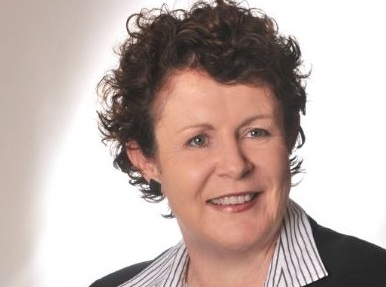
Housing strategist Leonie Freeman
We’re in the countdown to the election and the tone of the media coverage reinforces what we’ve been assuming for more than a year - that Auckland’s Housing Crisis would be one of the key issues of the campaign.
So, time to look past the rhetoric and the political promises to focus on what the hard numbers are telling us. So, what do they tell us about our progress towards solving perhaps the biggest issue facing our city?
Numbers of Houses completed
Statistics produced by Auckland Council show that in the 12 months to June 2017 we completed only 6,827 new houses.
This is far short of the target needed of 14,000 houses each year. In fact this is not even half the target needed.
How many do we need to build?
The Auckland Council’s Unitary Plan published in 2015 assumes that Auckland needs to build an additional 420,000 more homes by 2045. That equates to 14,000 each year for the 30 year period.
It’s more than a little sobering to recognise that this requires a building rate two and a half times greater than what we’ve actually managed over the past quarter century!
How many homes are we currently consenting?
We regularly hear about consenting numbers and how important they are in the drive to lift our game on housing supply. Fact: In the twelve months to June 2017, 10,364 houses were
consented.
However, this just highlights the big gap between the number of consents and the number of homes actually completed.
Just to re-state: we built less than 7000 new houses in the past year – we needed to have built twice that number. This is a huge and
deeply troubling performance failure.
Consumer’s Warning: Just because a home is consented, it doesn’t mean that home will actually be built ... as we see when we ask the question –
So what next?
Which leads to a further question: when exactly do we acknowledge that what we are doing isn’t solving our problem and won’t solve our problem? Surely, it’s way past time to be implementing a different approach.
The approach I’ve been advocating is based on genuine partnership. It would see all the players – government, council, iwi, developers, the community housing sector and the finance community single- mindedly focused on how we get more homes built, and how we make more of them affordable.
Here are some of the headline outcomes I’m confident we could achieve by taking this ‘collective impact’ approach:
- 420,000 new homes by 2045 with 125,000 built by 2025 – 50% of them classified as ‘affordable’;
- 3000 more social housing places by end of next year;
- An end to homelessness in central Auckland by 2022;
- More and better tenure options for tenants;
- Home ownership levels, which have been falling sharply, to be back up to 65% by 2025 for all Aucklanders.
You’ll find more detail about the tangible targets and how we can achieve them on my website – www.thehomepage.nz.
On 1 August, a group of concerned Aucklanders who want immediate action to fix the housing crisis organised the Auckland Housing Summit. The Summit called for collective action and innovative thinking, including establishing an independent not for profit organisation, tasked with solving the City’s housing woes.
This is a particularly crucial step – but just one of several key actions identified in the first Auckland Housing Summit report. But further details, including the full report, can be found at our website – aucklandhousingsummit.co.nz.
Let’s be clear. This is categorically about more than just talking.
Talking’s important, but we’ve had a heap of debate and, if anything, we’ve continued to go backwards on finding a fix for the housing crisis. The Summit was focused on getting action and achieving the results our city so desperately needs.
My process is designed to achieve, collaboratively, a long term fix for Auckland’s housing crisis. Which means it zeroes in on getting the houses we need built. Nothing less will do.
Read more:
Landlords key to solving crisis


 Search






