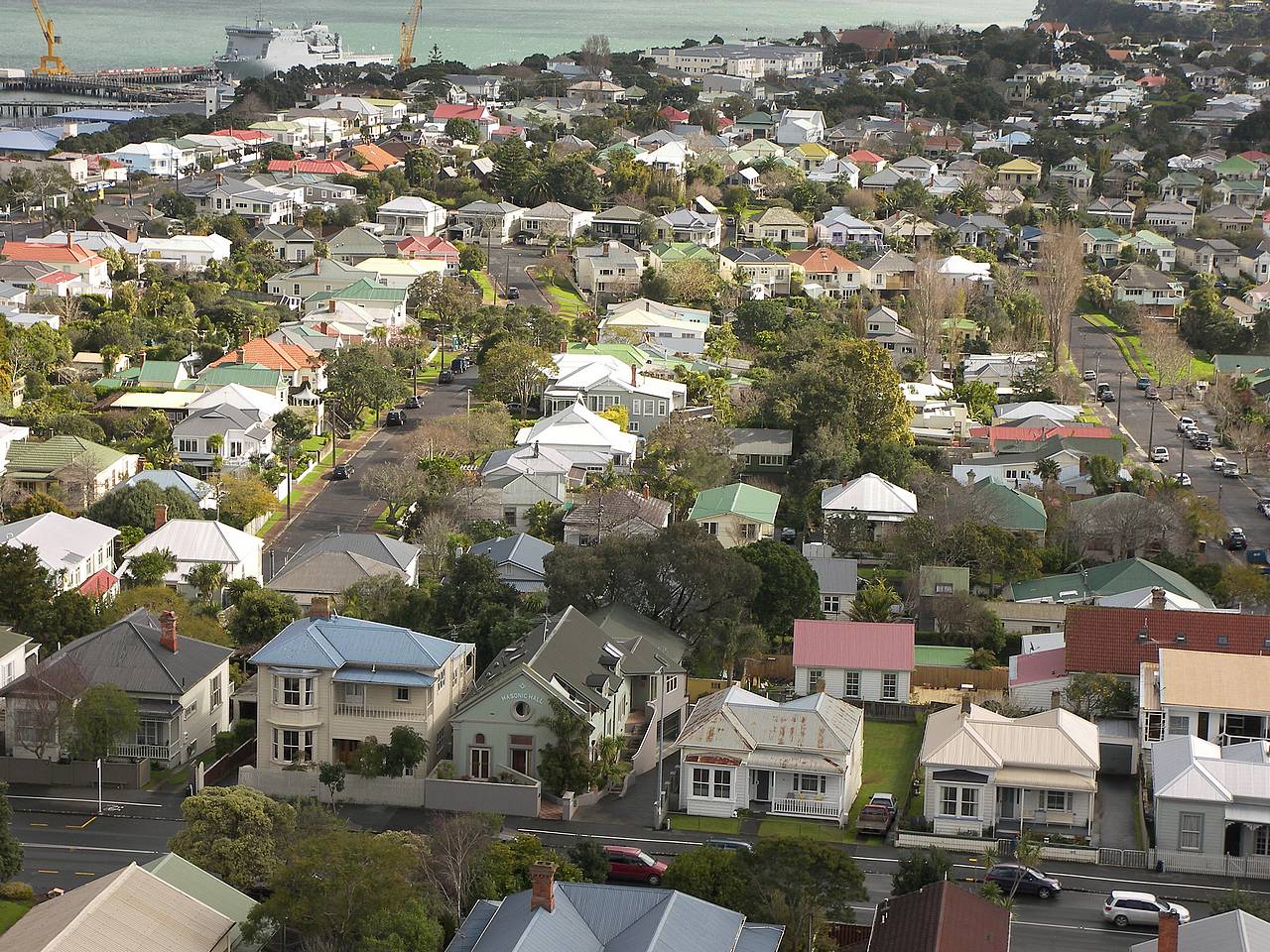
Housing in Auckland: Trends in housing from 1991 to 2013 uses the latest 2013 Census information, showing that in the seven years between the last two censuses, Auckland’s population grew by 8.5%, faster than the number of dwellings, which increased by 7.6%.
Statistics NZ researcher and report author Rosemary Goodyear says the aim of the report is to give agencies working in the housing area in Auckland information they need. “We hope this type of information will be useful to both policymakers deciding where services might be valuable, but also to developers deciding where to focus their efforts."
She said Auckland's housing had changed so much since the 1990s that it was now distinct to housing in the rest of New Zealand.
“There are more multi-storey dwellings, lower rates of home-ownership, more renting, and house prices have risen to higher levels than in other parts of New Zealand. It is not only young people who have been affected by the fall in home ownership,” Goodyear said. “There have been substantial drops in home ownership for Aucklanders aged in their 30s, 40s, and 50s since 2001.”
Goodyear said Statistics NZ worked closely with agencies in Auckland to find out what information they wanted to know about housing in the region.
One of the key findings of the report is that since 2006, building consents in Auckland are lower per head of population than in the rest of New Zealand. In 2013, there were 358 building consents per 100,000 people in Auckland compared with 423 per 100,000 for New Zealand overall. However, the number of building consents issued for new dwellings in Auckland has increased since the low point in 2009 to reach almost 7000 in the year to March 2014.
The report also found that dwelling density had increased significantly in Auckland between 2001 and 2013, from 85.5 to 102.0 dwellings per square kilometre. In 2013, the most dense area units (Auckland Central East and Auckland Central West) had over 5,000 dwellings per square kilometre.
“Levels of crowding have remained persistently high in Auckland,” Goodyear said. “In 2013 almost half of crowded households in New Zealand were in the Auckland region, compared with just over a third in 1991.”
Over 200,000 people in Auckland, including around 63,000 children, are now living in a crowded household. Crowding was highest among Pacific peoples, with 45.3 percent of Pacific peoples in Auckland living in a crowded household in 2013.


 Search