Property

OCR on hold until March: Economists

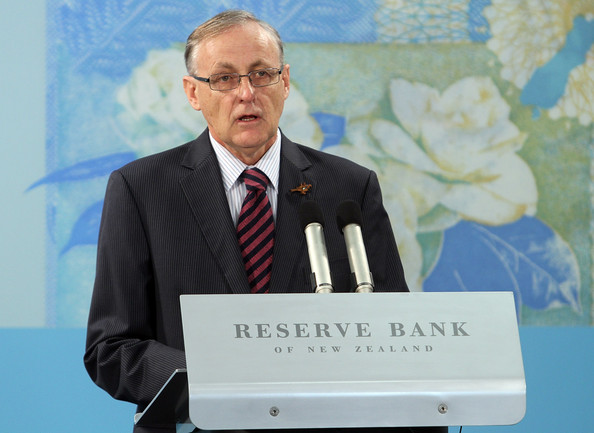
Benign inflation data, the still strong currency and the fragile global economy are likely to offset any concerns Reserve Bank Alan Bollard might have about the stronger than expected domestic growth data for the March quarter and rising house prices.

Monday, July 23rd 2012

All 13 economists surveyed expect Bollard to leave his official cash rate (OCR) unchanged at its record low 2.5% on Thursday and the earliest they expect him to raise it is in the March quarter next year.

Seven economists are predicting an OCR hike in the March quarter 2013, five expect Bollard to wait until June or July and Peter Cavanaugh at Bancorp Treasury Services now expects Bollard will wait until December next year.

Cavanaugh says the world economy, and the problems weighing it, are unlikely to be solved any time soon.

"There's going to be a long, drawn-out recovery. We're increasingly seeing the world gearing up for that," Cavanaugh says.

"There will be some inflation and growth potential in New Zealand, particularly from Christchurch, but that's a fair way away," he says.

Darren Gibbs at Deutsche Bank says the central bank is likely to treat the strong March quarter growth data "with a degree of caution," especially in light of the large up and downward revisions in recent quarters.

"The global economic picture is likely to remain a key source of concern," Gibbs says. "It seems unlikely that the Reserve Bank will feel any more optimistic about the outlook for political and economic stress in Europe than was the case in June."

American and Asian data has also continued to disappoint.

Christina Leung at ASB Bank says although her bank is still picking a rate hike in March next year because of expectations of slightly stronger inflation than the central bank currently expects, "offshore uncertainty means there is the risk the timing of the OCR increase will be delayed."

The household sector has begun to recover, albeit gradually, with the exception of the stronger housing market, Leung says.

"The extent to which house prices continue to increase and the flow-through effects to wider inflation pressures in the NZ economy, will be an important development to watch over the coming year," she says.

Comments

No comments yet

Most Read

AIA - Go Home Loans 4.00
Unity First Home Buyer special 4.15
SBS FirstHome Combo 4.29
ICBC 4.49
Kainga Ora 4.59
SBS Bank Special 4.69
China Construction Bank 4.85
Co-operative Bank - First Home Special 4.89
Unity Special 4.99
TSB Special 4.99
Westpac Special 4.99
Kainga Ora 4.95
China Construction Bank 4.95
ICBC 4.99
SBS Bank Special 5.29
ASB Bank 5.35
ANZ Special 5.35
TSB Special 5.35
BNZ - Std 5.35
AIA - Go Home Loans 5.35
Westpac Special 5.39
Co-operative Bank - First Home Special 5.39
SBS Bank Special 5.49
Westpac Special 5.59
ICBC 5.65
Kainga Ora 5.69
BNZ - Std 5.75
ASB Bank 5.75
AIA - Go Home Loans 5.75
Kiwibank Special 5.85
TSB Special 5.85
ANZ Special 5.89
Co-operative Bank - First Home Special 5.89
SBS FirstHome Combo 3.29
AIA - Back My Build 3.34
SBS Construction lending for FHB 3.79
CFML 321 Loans 4.20
ICBC 5.39
Co-operative Bank - Owner Occ 5.69
Co-operative Bank - Standard 5.69
Kainga Ora 5.79
Pepper Money Prime 5.99
Kiwibank 6.25
Kiwibank Special 6.25

More Stories

Can the NZ economy grow while house prices stagnate?

Thursday, July 09th 2026

Can the NZ economy grow while house prices stagnate?

The question of whether the New Zealand economy can grow much without a recovery in the housing market remains a live issue.

Thursday, February 19th 2026

RBNZ expects slower house price growth in the current recovery

The Reserve Bank thinks house prices will rise at a much slower pace during the current recovery than they have in past cycles.

Wednesday, January 07th 2026

Queenstown not off the radar for first home buyers

First home buyers are not being deterred by Queenstown’s soaring house prices.

Record levels of first home buyers taking out low deposit loans

Tuesday, December 23rd 2025

Record levels of first home buyers taking out low deposit loans

About half of all first home buyer lending has been done at a less than 20% deposit in recent months.