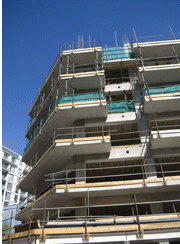
Changes in the new act mean in theory that owners of unit title properties no longer need to have 100 per cent buy-in from others in the development to make changes, such as extensions or redevelopment.
“Now the new act language says if it materially impacts others, you have to get their consent.”
But what counted as a material impact has prompted so much debate that three cases had crossed the firm’s desks in the past three months alone, Marsden said.
“We thought it might make things a bit easier but it hasn’t seemed to so far. It might get better as time passes but it’s not proving to be as useful as we had hoped.”
Marsden said she was also aware of confusion relating to changes in the rules around body corporate purchases of land.
“If a body corporate buys land as common property, such as adding a visitor carpark, the owners with the more valuable units will be paying more.”
But she said while some had taken that to mean that purchasing any land would be dealt with in this way, that was not the case.
The cost of carparks that would be allocated to units, for example, would distributed evenly, with a set price, per carpark, per unit.
“Usually carparks have a separate interest attached to them so owners pay the same regardless. The bigger ones only pay more if it’s about adding common space.”
Marsden said she could understand why people with big, expensive apartments might feel aggrieved in complexes where much cheaper units got a much smaller chunk of the bill for common land, such as playgrounds, but it was not necessarily unfair. “Often it’s the owners with more money that come up with schemes like this.”
Ownership interest is now fixed by a registered valuer on the basis of the relative value of the unit in relation to each of the other units. Under the old act, the body corporate levies were paid in accordance with the unit entitlement which was determined on area proportion.
Utility interest is a new concept that allows a different proportion to be paid in respect of particular utilities where it would be unfair to determine it solely on value.
This would apply in instances such as apartments above shops. It would be unfair for the commercial owners of the shops on the bottom floor to pay for the costs of a lift they do not use. Utility interest might be altered for that cost.


 Search