Property

Christchurch owners go to court over leases

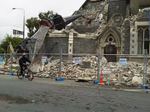
Hundreds of commercial landlords and their tenants in Christchurch have been forced to reach for their dictionaries since the city’s earthquakes.

Monday, July 09th 2012

Peter Smith, of Smith and Partners, said commercial leases were generally straightforward in that they were governed by an act of Parliament and often followed a set form.

But the Christchurch earthquake had highlighted the fact that from time to time events happened that had not be contemplated when the leases were drawn up, and could cause a few problems.

“There’s been argument over the definition of the word ‘untenantable’. There have been court cases arguing about what it means.”

Smith said there had been so many that even his Auckland-based firm had been involved.

He said the courts had decided that because a lease was a permanent arrangement, damage must be permanent, too, if it was to cause the end of a lease.

If the building was not completely written off, the tenant could not get out of the lease and had to come to an arrangement with the landlord until the building was tenantable again.

Smith said he had heard of cases where both sides used damage as a reason to try to break the lease unsuccessfully.

But he said most cases were being resolved, now the law had been tested in court enough times.

He had worked with one tenant who wanted to cancel a lease because of the length of time reconstruction was going to take. He said the landlord in that case was very understanding.

At the time of the first earthquakes, Evan Harris, a director of Colliers International Property Manager, said that the earthquake showed that many commercial leases didn’t consider the problems that tenants and landlords would encounter when there was structural damage.

He said there was often confusion about who had to pay for repairs.

Office spaces were usually leased empty and tenants broke them into smaller offices by installing walls. 

But if an earthquake separated the partitioning walls from the structural columns, "is that the tenant's fault or the landlord's fault? the landlord owns the column and the tenant ows the partitioning," Harris said.


Comments

No comments yet

Most Read

AIA - Go Home Loans 4.00
Unity First Home Buyer special 4.15
SBS FirstHome Combo 4.29
ICBC 4.49
Kainga Ora 4.59
SBS Bank Special 4.69
China Construction Bank 4.85
Co-operative Bank - First Home Special 4.89
Unity Special 4.99
TSB Special 4.99
Westpac Special 4.99
Kainga Ora 4.95
China Construction Bank 4.95
ICBC 4.99
SBS Bank Special 5.29
ASB Bank 5.35
ANZ Special 5.35
TSB Special 5.35
BNZ - Std 5.35
AIA - Go Home Loans 5.35
Westpac Special 5.39
Co-operative Bank - First Home Special 5.39
SBS Bank Special 5.49
Westpac Special 5.59
ICBC 5.65
Kainga Ora 5.69
BNZ - Std 5.75
ASB Bank 5.75
AIA - Go Home Loans 5.75
Kiwibank Special 5.85
TSB Special 5.85
ANZ Special 5.89
Co-operative Bank - First Home Special 5.89
SBS FirstHome Combo 3.29
AIA - Back My Build 3.34
SBS Construction lending for FHB 3.79
CFML 321 Loans 4.20
ICBC 5.39
Co-operative Bank - Owner Occ 5.69
Co-operative Bank - Standard 5.69
Kainga Ora 5.79
Pepper Money Prime 5.99
Kiwibank 6.25
Kiwibank Special 6.25

More Stories

Can the NZ economy grow while house prices stagnate?

Thursday, July 09th 2026

Can the NZ economy grow while house prices stagnate?

The question of whether the New Zealand economy can grow much without a recovery in the housing market remains a live issue.

Thursday, February 19th 2026

RBNZ expects slower house price growth in the current recovery

The Reserve Bank thinks house prices will rise at a much slower pace during the current recovery than they have in past cycles.

Wednesday, January 07th 2026

Queenstown not off the radar for first home buyers

First home buyers are not being deterred by Queenstown’s soaring house prices.

Record levels of first home buyers taking out low deposit loans

Tuesday, December 23rd 2025

Record levels of first home buyers taking out low deposit loans

About half of all first home buyer lending has been done at a less than 20% deposit in recent months.